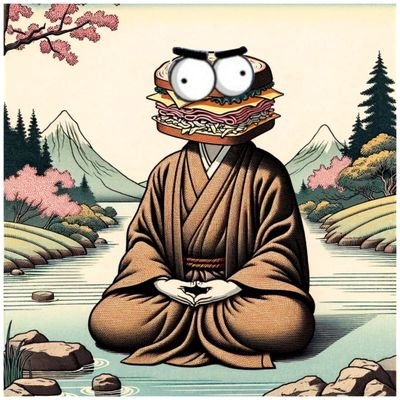
Self-Arising Display, Never Divided In Dzogchen, the starting point is uncompromising: the nature of mind—rigpa—is already complete, already open, already free. Nothing in experience needs to be repaired, purified, or conceptually reorganized to become whole. The apparent fragmentation of life does not occur in reality itself, but in the way awareness fails to recognize its own display. Before thought comments, before naming fixes boundaries, there is simple knowing presence. Sound arises. Color appears. Sensation moves. Each manifests vividly, yet none arrives carrying an inherent division between observer and observed. The split comes later, through what the Dzogchen masters call khrul pa—misrecognition. Longchenpa describes this with remarkable precision: appearances are the spontaneous expression of awareness, but when their nature is not recognized, mind imputes separation and solidifies experience into subject and object. What was originally self-liberating display becomes entanglement. Importantly, Dzogchen does not treat conceptual thought as an enemy. Thoughts are themselves expressions of the same empty clarity. The problem is not that thinking occurs; the problem is reification—taking what is fluid and self-arising to be fixed and independently real. Tulku Urgyen Rinpoche states it plainly: “Thoughts are like waves in the ocean. Recognize the water, and the waves liberate themselves.” This is the essential gesture of Dzogchen. Nothing needs to be stopped. Nothing needs to be suppressed. Recognition alone is sufficient. When recognition is absent, experience seems to organize around a center. There appears to be a watcher inside and a world outside. Effort begins. Management begins. Subtle tension pervades even ordinary moments. This is not because reality has fractured, but because awareness has overlooked its own non-dual nature. The classical instruction is disarmingly direct: look at the one who is looking. Not philosophically. Not analytically. Directly. When attention turns toward the supposed observer, what is actually found? There may be sensations in the body, fleeting thoughts claiming ownership, a felt sense of location. Yet the solid knower that experience seems to orbit is never discovered. What remains is open knowing—empty yet vividly present. This is what the Dzogchen texts call the union of emptiness and clarity (stong gsal). Appearances continue to arise in full richness, but they are seen to be inseparable from the knowing in which they appear. Garab Dorje’s first statement captures the heart of the matter: “Directly introduce the face of rigpa.” Because once rigpa recognizes itself, the apparent fragmentation of experience loses its authority. Thoughts still move. Perceptions still unfold. Emotions still ripple through the body. But they self-liberate upon arising, like writing on water. This is a crucial correction: Dzogchen is not pointing to a blank state without differentiation. The display remains diverse and dynamic. What dissolves is the imagined separation within it. Right now, this can be quietly tested. A sound appears. Before the mind labels it, what is its nature? A thought arises. Before it is believed, what is it made of? The sense of being someone here—when looked at directly, does it stand as a solid entity, or does it too arise and vanish within knowing? Look gently, without strain. If seen clearly, the structure reveals itself: everything that appears is already occurring within the same open field. Nothing stands outside it. Nothing divides it. Longchenpa expressed the simplicity of this recognition: “Since everything is the display of awareness, there is nothing to accept or reject.” When this is no longer merely understood but directly recognized, experience does not become distant or abstract. It becomes intimate, immediate, and naturally uncontrived. Nothing new has been added. Nothing real has been split. The display was always self-arising, and awareness was always undivided.


